


- What is Price Strategy A/B Testing
- Why Testing Pricing Strategy Matters for E-commerce Growth
- How to Know If Your Price Is Too High or Too Low
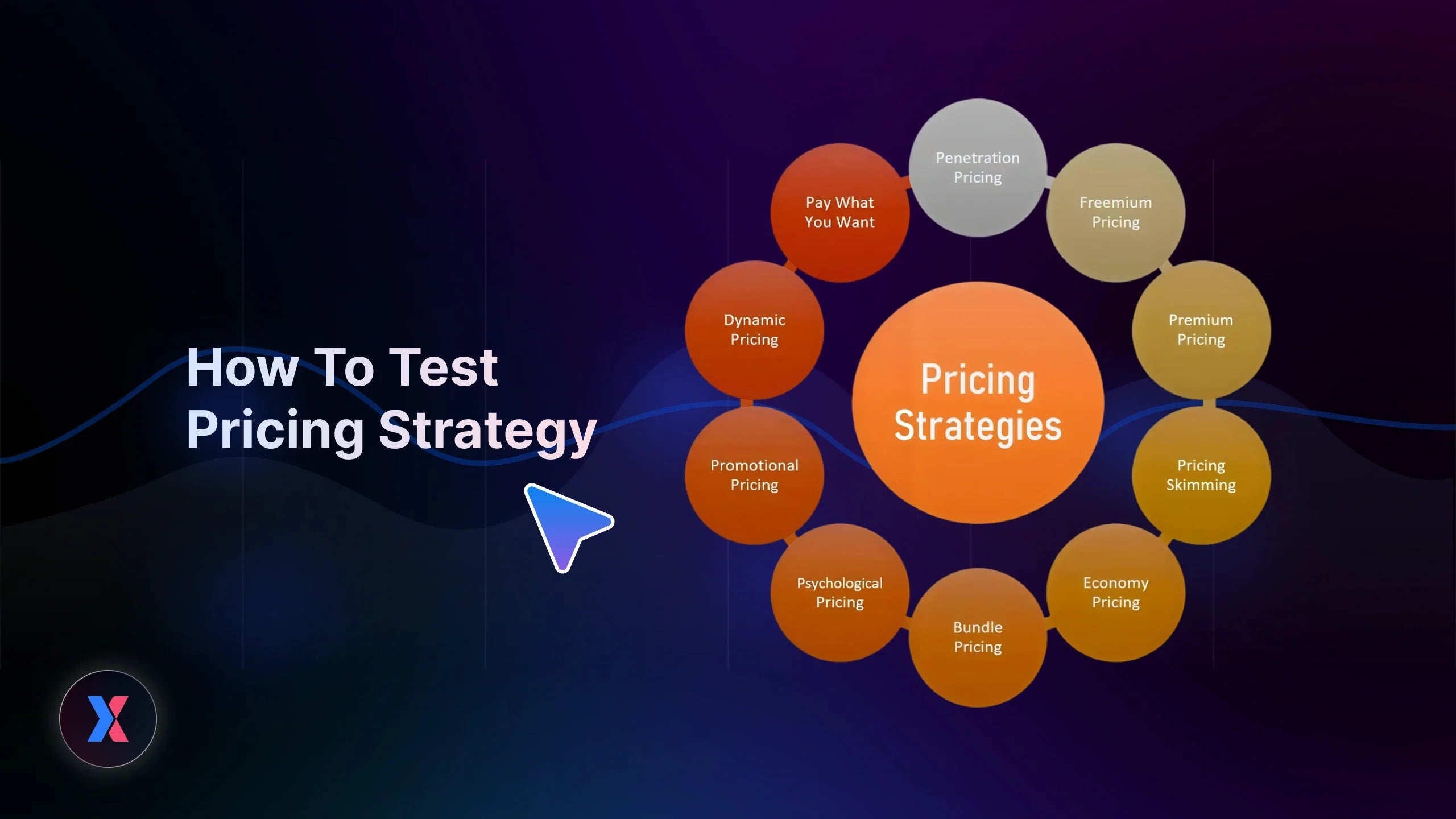
- Common Pricing Strategies You Can Test
- How to Test Your Pricing Strategy in 5 Simple Steps
- A/B Testing Pricing: What Most Merchants Get Wrong
- Real Examples of Pricing Experiments (E-commerce Use Cases)
- Stop Guessing Your Price, Start Testing It
- FAQs about Pricing Strategy Testing
How to test pricing strategy is one of the most overlooked growth levers in e-commerce. Many Shopify merchants optimize ads and pages but still guess their pricing. A small change can boost revenue or quietly reduce profits, and without testing, you will not know which.
Pricing is not just a number. It shapes how customers perceive value, how often they convert, and how much revenue each visitor brings. Lower prices may increase conversions, while higher prices can sometimes drive more revenue.
Instead of guessing, the smartest brands validate pricing with real data. In this guide, you will learn how to test pricing strategy step by step and find the price point that actually maximizes your revenue.

What is Price Strategy A/B Testing
Testing a pricing strategy means using real customer data to validate whether your current price is helping you maximize revenue, not just conversions. Instead of relying on assumptions or competitor benchmarks, you systematically compare different price points or pricing models to see which one performs best.
In e-commerce, this is typically done through controlled experiments like A/B testing, where different groups of visitors see different prices. By measuring how each variant impacts key metrics such as conversion rate, revenue per visitor, and profit margin, you can identify which pricing approach actually works in practice.
Pricing Strategy vs. Pricing Experiment: What’s the Difference?
It is important to separate these two concepts:
-
Pricing strategy is your overall approach to pricing, such as premium pricing, discount-driven pricing, or bundle pricing
-
Pricing experiment is the method you use to validate that strategy with real data

Think of your pricing strategy as the hypothesis, and the pricing experiment as the way you prove whether that hypothesis is right or wrong.
In practice, successful e-commerce brands continuously test and refine their pricing instead of treating it as a fixed decision.
Why Testing Pricing Strategy Matters for E-commerce Growth
Pricing is one of the few levers that directly impacts conversion rate, average order value, and profit margin at the same time. Unlike traffic or design changes, even a small pricing adjustment can immediately change how much revenue you generate from the same number of visitors.
Pricing Impacts Key Ecommerce Metrics
-
Conversion rate (CVR): Lower prices often reduce friction and increase purchase likelihood
-
Average order value (AOV): Pricing structure, bundles, or tiers can push customers to spend more
-
Profit margin: Higher prices can improve margins, even if conversion drops slightly
The key is that these metrics do not move independently. Optimizing one without considering the others can lead to misleading results.
Lower Price Does Not Always Mean Higher Revenue
A common mistake is assuming that lowering prices will automatically increase revenue. In reality, revenue depends on both conversion rate and price.
For example:
-
Variant A: $29 → higher conversion rate
-
Variant B: $39 → lower conversion rate
At first glance, $29 may seem better because more people buy. But when you factor in revenue per visitor, the $39 price can outperform because each order generates more value.
This is why testing the pricing strategy is critical. It helps you move beyond surface metrics and identify the price point that truly maximizes revenue, not just conversions.
For growing e-commerce brands, especially on Shopify, this is often the difference between scaling profitably and scaling inefficiently.
How to Know If Your Price Is Too High or Too Low
One of the biggest challenges when you test pricing strategy is interpreting the signals correctly. Pricing rarely fails in obvious ways. Instead, it shows up through patterns in your data that many merchants overlook.
Understanding these signals helps you identify whether your current price is limiting growth or leaving profit on the table.
Signs Your Price May Be Too High
When your price is too high, the most common symptom is strong interest but weak conversion.

This means customers are considering your product, but something is stopping them from completing the purchase.
-
High traffic but low conversion rate
-
Strong add-to-cart rate but low checkout completion
-
Frequent product page views with short session duration
-
Competitors with similar offers converting better at lower prices
In this case, your pricing may be creating friction. Customers see value, but not enough to justify the cost.
Signs Your Price May Be Too Low
A low price can feel like a win because conversions increase, but it can quietly hurt your business over time. The key issue is that revenue and profit may not scale efficiently.
-
High conversion rate but low revenue per visitor
-
Strong sales volume but weak profit margins
-
Customers rarely hesitate or compare before purchasing
-
Difficulty scaling paid ads due to limited margin
If your product sells easily but profitability is low, your pricing may not reflect its true value.
Key Data Signals You Should Monitor
To properly evaluate your pricing, you need to look beyond a single metric and understand how different signals interact.
-
Revenue per visitor (RPV): The most important indicator when testing pricing
-
Conversion rate (CVR): Helps explain user behavior, but should not be used alone
-
Average order value (AOV): Shows how pricing structure impacts spend
-
Profit margin: Ensures your growth is sustainable
The goal is to connect these metrics, not optimize them in isolation. A pricing strategy that increases revenue while maintaining healthy margins is usually the strongest long-term option.
Common Pricing Strategies You Can Test
Not all pricing tests are about simply raising or lowering your price. In practice, e-commerce brands test different pricing structures and psychological triggers to influence how customers perceive value and make decisions.
Below are some of the most effective pricing strategies you can test.
Discount vs No Discount
This is one of the most common experiments. Many merchants rely heavily on discounts to drive conversions, but discounts can also reduce perceived value and hurt margins.

Testing this helps you answer:
-
Do you actually need a discount to convert?
-
Can removing discounts increase profit without hurting revenue?
In some cases, removing a discount can maintain conversion while increasing profit per order.
Charm Pricing (e.g., $9.99 vs $10)
Charm pricing leverages psychological perception. Prices ending in .99 often feel cheaper, even when the difference is minimal.
You can test:
-
$29 vs $29.99
-
$30 vs $29.99
While the difference seems small, it can impact how customers evaluate affordability and urgency.
Bundle Pricing
Instead of selling products individually, you group them into a bundle at a slightly reduced combined price. This strategy helps you increase average order value, improve perceived value, and also move slower inventory.

Testing bundle vs. single product pricing can reveal whether customers prefer convenience and savings over flexibility.
Tiered Pricing (Good–Better–Best)
This strategy introduces multiple pricing options to guide customers toward a preferred choice.
For example:
-
Basic: $19
-
Standard: $29
-
Premium: $39
By structuring options this way, you can anchor perceived value, encourage upgrades to mid-tier plans, and increase overall revenue per customer.
Testing different tiers helps you identify which structure drives the best revenue mix.
Anchor Pricing (Compare-at Price)
Anchor pricing shows a higher “original” price next to the current price to make the deal feel more attractive.
Example: $49 → now $29
This creates a strong perception of savings and urgency. However, overusing it can reduce trust.
Testing anchor pricing helps you understand:
-
Does it increase conversions?
-
Does it impact long-term brand perception?
Each of these strategies works differently depending on your audience, product type, and positioning. That is why the goal is not to pick one “best” strategy, but to test and validate what works for your store with real data.
How to Test Your Pricing Strategy in 5 Simple Steps
To test pricing strategy effectively, you need more than just changing numbers on your product page. A proper pricing test follows a structured process that ensures your results are reliable, actionable, and tied to real business impact.
Below is a step-by-step framework that e-commerce brands use to run clean and meaningful pricing experiments.
Step 1: Define a Clear Pricing Hypothesis
Every pricing experiment should start with a specific, testable assumption. Instead of randomly changing prices, you need a hypothesis that connects pricing to a measurable outcome.
For example, a strong hypothesis could be: “Reducing the price from $49 to $39 will increase revenue per visitor by improving conversion rate without significantly lowering margin.”
This step is critical because it sets the direction for your entire test. Without a clear hypothesis, it becomes difficult for you to interpret results or decide what to do next.
Learn more: 70 A/B Testing Hypothesis Examples for Landing, Product, and Pricing Pages
Step 2: Choose the Right Metrics to Measure
When you test your pricing strategy, focusing on the wrong metric can lead to misleading conclusions. Many merchants look only at conversion rate, but pricing decisions require a broader view.
The most reliable primary metric is revenue per visitor, because it reflects both price and conversion combined. Conversion rate can still be useful as a supporting metric, while profit margin should always be considered when evaluating long-term impact.
By aligning your metrics with revenue and profitability, you avoid the common trap of optimizing for conversions while losing money.
Step 3: Set Up a Controlled Pricing Experiment
To properly test different price points, you need a controlled environment where variables are isolated. This is where A/B testing becomes essential.
In a typical setup, your traffic is split between two or more variants. Each group sees a different price, but everything else on the page remains unchanged. This ensures that any difference in performance is caused by pricing, not other factors.

A balanced traffic split, such as 50/50, is usually recommended to collect comparable data efficiently. For Shopify merchants, using a dedicated testing tool helps avoid manual errors and ensures consistent tracking across sessions.
Learn more: Split Traffic Explained: How to Allocate Traffic Correctly in A/B Testing
Step 4: Run the Test Long Enough to Reach Reliable Results
One of the biggest mistakes in pricing experiments is stopping too early. Because short-term fluctuations can make a variant appear better or worse than it actually is.
To test a pricing strategy accurately, you need to collect enough data to reach statistical confidence. While you do not need advanced math, the principle is simple: the more data you gather, the more reliable your conclusion becomes.
Running the test across different days and traffic patterns also helps reduce bias. Ending a test too soon often leads to decisions based on noise rather than real trends.
Step 5: Analyze Results Based on Revenue Impact
After your test ends, the goal is not to find the variant with the highest conversion rate but the one that drives the best overall outcome.
A lower price may increase conversions but reduce total revenue or profit. On the other hand, a higher price may convert fewer users but generate more revenue per visitor.

This is why analyzing your test results through a revenue lens is essential when you test a pricing strategy. The winning variant is the one that aligns with your business goal, whether that is maximizing revenue, profit, or customer lifetime value.
Key takeaway: When done correctly, this process turns pricing from a guessing game into a repeatable growth system. Instead of relying on intuition, you continuously validate and refine your pricing strategy based on real customer behavior.
A/B Testing Pricing: What Most Merchants Get Wrong
A/B testing is one of the most reliable ways to test pricing strategy, but many ecommerce merchants still get misleading results. The issue is not the method itself, but how the test is designed and interpreted.
If your pricing experiments are not set up correctly, you can easily draw the wrong conclusions and make decisions that hurt revenue instead of improving it.
#1. Test Too Many Variables at Once
When testing pricing, your goal is to isolate the impact of price. However, many merchants change multiple elements at the same time, such as price, layout, copy, and offers.
Common mistakes include:
-
Change price together with discounts or messaging
-
Update product page design during the test
-
Add new trust badges or bundles at the same time
This makes it impossible to know what actually caused the result. A clean pricing experiment should focus on one variable so you can confidently attribute performance changes to price.
#2. Focus Only on Conversion Rate
Conversion rate is often the first metric people look at, but it does not tell the full story when you test pricing strategy.
A lower price can increase conversions but reduce total revenue or profit. On the other hand, a higher price may lower conversions while generating more revenue per visitor.
If you optimize only for conversion rate, you risk scaling a strategy that looks good on the surface but underperforms financially.
#3. Not Segment Traffic Properly
Not all visitors behave the same, and pricing sensitivity can vary significantly between different groups, such as:
-
New visitors are often more price-sensitive
-
Returning visitors may be less sensitive and more trust-driven
-
Traffic from ads can behave differently from organic traffic
If you treat all traffic as one group, you may miss important insights. Segmenting your data allows you to understand how pricing impacts different audiences and make more precise decisions.
#4. Ignore Psychological Pricing Effects
Pricing is not purely rational. Small changes in how a price is presented can influence perception and behavior.
For example, $29.99 can feel more attractive than $30, and showing a higher reference price can increase perceived value. If you only test numerical changes without considering psychology, you may overlook opportunities to improve performance without significantly changing your actual price.
Learn more: 13+ A/B Testing Mistakes that Hurt Your Store Conversions
Real Examples of Pricing Experiments (E-commerce Use Cases)
Understanding theory is useful, but what really builds confidence is seeing how pricing experiments work in real scenarios. Below are practical examples that show how different pricing strategies can lead to unexpected but measurable outcomes.
Example 1: Higher Price, Higher Revenue
A Shopify store selling a skincare product tested two price points using an A/B testing setup.
-
Variant A (control): $29
-
Variant B (test): $39
Results after 14 days:
Conversion rate:
-
$29 → 4.8%
-
$39 → 3.9%
Revenue per visitor:
-
$29 → $1.39
-
$39 → $1.52
Even though the higher price reduced the conversion rate, it increased revenue per visitor by around 9%. The higher perceived value and margin per order outweighed the drop in conversions.
Insight: When you test pricing strategy, conversion rate alone can be misleading. In this case, the higher price point delivered stronger overall performance despite fewer purchases.
Example 2: Removing Discount Increased Profit
An apparel brand was heavily relying on a “20% off” promotion across its product pages. They decided to test removing the discount for a portion of their traffic.
-
Variant A: $50 with 20% discount → $40 final price
-
Variant B: Flat price $45, no discount
Results after 10 days:
Conversion rate:
-
Discounted → 5.2%
-
No discount → 4.9%
Revenue per visitor:
-
Discounted → $2.08
-
No discount → $2.21
Profit margin per order increased by ~12%. Although the discounted version had a slightly higher conversion rate, the non-discounted price generated more revenue and significantly improved profit.
Insight: Discounts do not always drive better business outcomes. Testing showed that removing the discount preserved perceived value while improving margins.
Example 3: Bundle Pricing vs Single Product
A supplement brand tested whether bundling products could increase average order value compared to selling a single item.
-
Variant A: Single product → $25
-
Variant B: Bundle of 3 → $60 (equivalent to $20 per unit)
Results after 3 weeks:
Conversion rate:
-
Single product → 6.5%
-
Bundle → 4.2%
Average order value (AOV):
-
Single product → $25
-
Bundle → $60
Revenue per visitor:
-
Single product → $1.63
-
Bundle → $2.52
Even with a lower conversion rate, the bundle increased revenue per visitor by more than 50% due to a much higher order value.
Insight: Customers may convert less frequently on higher-priced bundles, but the overall revenue impact can be significantly stronger. This type of pricing experiment is especially effective for consumable or repeat-purchase products.
Stop Guessing Your Price, Start Testing It
Pricing is one of the most powerful levers you have to grow revenue, but it is also one of the easiest to get wrong when based on assumptions. Small changes can significantly impact conversion, average order value, and profit, yet without testing, you are making decisions in the dark.
The only reliable way to find your optimal price point is to validate it with real data. When you test pricing strategy through controlled experiments, you move from guessing to making confident, revenue-driven decisions.
Install GemX today and start running your first pricing test with real traffic so you can unlock the price point that actually maximizes your revenue.
FAQs about Pricing Strategy Testing


